Cats have a reputation in photography earned honestly: they cannot be posed, bribed as reliably as dogs, or fooled twice by the same toy. Owners assume a studio session is a dog thing and that their cat, dignified and uncooperative, is unphotographable. Cat people who have tried a patient studio tend to report the opposite. Cats photograph beautifully when the session is run on feline terms, which are simply different terms from a dog's.
This guide explains how indoor cat sessions work around Cornelius and Lake Norman: the transport, the settling, the lures, and the hard rule that governs all of it. It also covers who should skip the studio and what to ask any photographer before booking a cat into a session built mainly for dogs.
The session runs on the cat's clock
A dog session burns energy down to relaxed. A cat session builds comfort up to curious, and it cannot be rushed past the exploring stage. The cat comes out of the carrier when it chooses, maps the room, claims a perch or a backdrop corner, and only then becomes a subject. Experienced pet photographers protect this stage fiercely, because a cat who owns the room gives the direct, level stare that makes a great portrait, while a cat pulled from its carrier gives only escape attempts.
Sessions are shorter and quieter than dog sessions. Fewer people, lower voices, no sudden moves, and equipment already in place before the cat arrives. Flash and shutter sounds are introduced gently, the same pairing of strange event and treat that works for nervous dogs, adjusted for an animal that finds repetition deeply suspicious. Variety is planned in advance: two or three setups, ready to go, so the cat's best ten minutes are never spent waiting on a backdrop change.
- Carrier out, days ahead. Leave the carrier open at home with bedding inside so it stops meaning car trouble.
- Short, calm transport. Cover the carrier with a light cloth; most cats travel quieter in the dim.
- Room before camera. The cat explores the studio from the carrier outward, on feline timing, not the schedule.
- Toys and lures, not hands. Feather wands and treats draw the look; nobody grabs or poses a cat.
- Done means done. A cat who has finished is finished; the gallery comes from the minutes that worked.
Lures, looks, and the toys that work
The cat photographer's toolkit is a study in feline motivation. Feather wands and string toys produce the hunting face, ears forward, pupils wide, body coiled, that owners recognize from home play. Treat pastes and lickable treats hold a cat in place for the formal portrait, because a cat licking is a cat staying. Catnip works on the cats it works on and flattens the rest into a drowsy sprawl, which is itself a legitimate portrait of a cat being a cat.
What does not work is handling. A cat placed in a pose leaves it, and the photograph shows the leaving. Studios build perches, boxes, and inviting surfaces into the set and let the cat choose among them, then make the chosen spot the portrait. It is set design as negotiation, and at a studio such as Zook Photo, the patience to run a session this way is the entire product a cat owner is buying.
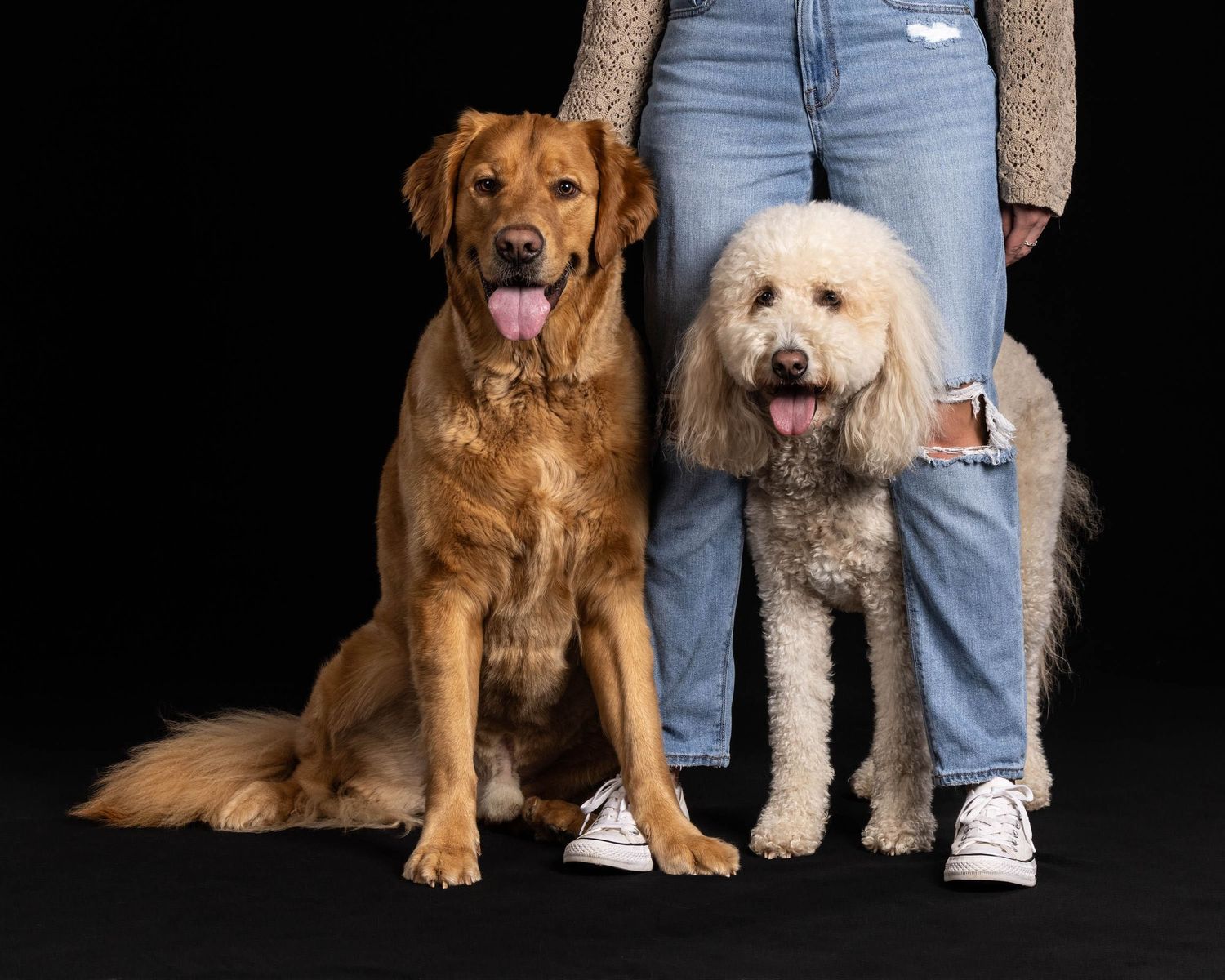
When to skip the studio, and what to ask
Some cats should not travel: the very elderly, cats with health conditions that stress easily, and cats whose fear of carriers and cars is extreme. For them, ask about alternatives, or put the effort into home photographs with window light and the methods that work for dark coats and shy animals: patience, distance, and a long lens from across the room. A portrait that costs a cat two days of hiding under the bed is too expensive at any quality.
Before booking, ask three questions. Does the studio schedule cats separately from dogs, so no barking neighbors share the hour? How much of the session is settling time? And what happens if the cat never settles, is there a reschedule policy for a genuine no-show performance? A studio experienced with cats answers all three without hesitation, because cats have been teaching photographers those policies for years.
Common questions
Will my cat need to be on a leash or harness?
No. Indoor studio sessions run loose in a closed room once the cat settles. Bring the cat in a secure carrier, and let the studio handle the rest.
Can my cat and dog be photographed together?
Sometimes, if they genuinely get along at home. The animals are settled separately first and combined only if both are calm. Forced togetherness photographs exactly as tense as it sounds.
How long does a cat session take?
Usually shorter in working time than a dog session but padded with settling time. The cat decides the schedule; a good gallery can come from a handful of good minutes.
Photos in this guide are representative stock images.
← All guides from Zook Photo← Back to Zook Photo