Owners of black dogs know the disappointment well. You take a photo of a dog whose face you can read perfectly in person, and the phone hands you back a silhouette with ears. The eyes are gone, the expression is gone, and what remains is a shape. It is not your dog's fault and it is not really yours. Dark coats break the assumptions automatic cameras are built on, and fixing that is one of the clearest cases for what a studio actually does differently.
This guide explains why black and dark-coated dogs photograph badly on phones, and the specific lighting and exposure choices professionals use instead. The same ideas help your home photos too, though a studio controls every variable at once, which is why the difference is so visible in the finished portrait.
Why cameras get black dogs wrong
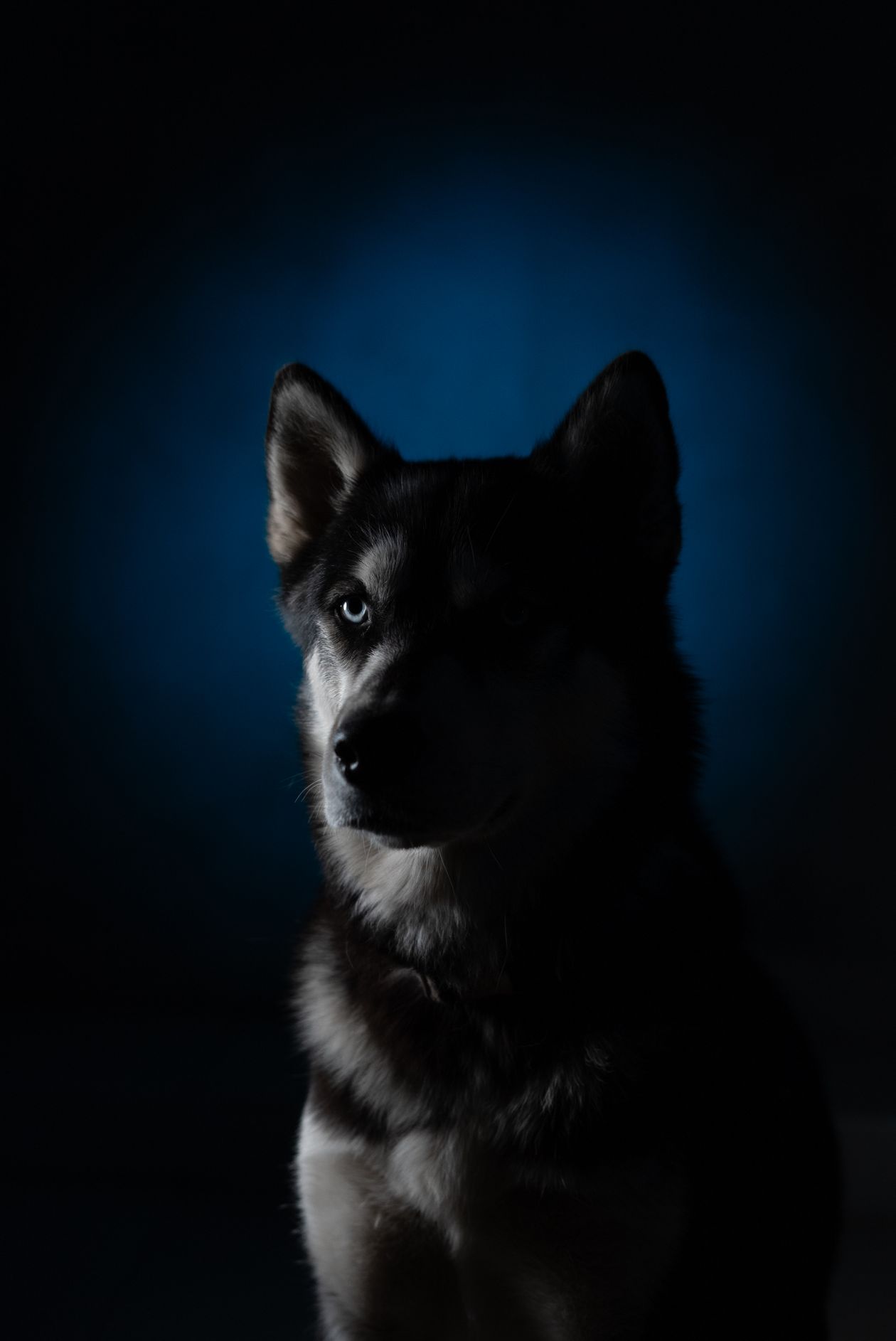
A camera's meter tries to make the average scene a medium tone. A black dog fills the frame with a subject that should stay near-black, so an automatic camera either brightens everything and turns the coat a muddy gray-brown, or exposes for the brighter room and lets the dog collapse into featureless black. Phone processing makes it worse: aggressive noise reduction smooths the fine texture of fur, and that texture is exactly what separates a black dog's shoulder from its neck from its ear.
Dark eyes compound it. A brown or black eye in a black face has almost no natural contrast, so without a deliberate reflection in the eye, a catchlight, the portrait loses the single detail viewers connect with first. In person your brain supplies the expression from movement and context. In a still photograph, if the eyes and coat texture are not recorded, they are simply not there.
Light that models instead of flattens
Studios solve the problem with large, soft, directional light. A big soft source placed to one side wraps gradually across the coat, creating a slow gradient of tones that describes the dog's shape: shoulder, ribcage, the curve of a skull. Hard, direct light does the opposite, skimming the top guard hairs into a silvery sheen while everything below falls to black. Direction is what turns a silhouette into a sculpture.
The second light is the quiet hero: a rim or edge light behind the dog that draws a bright outline where the coat meets the background. Combined with a background chosen a few tones lighter than the dog, or a few tones darker with that rim light doing the separation, the dog lifts cleanly off the backdrop. Add a controlled catchlight and the face comes back. None of this is exotic equipment; it is deliberate placement, which is what a studio session is really paying for.
| The problem | Why it happens | How studios solve it |
|---|---|---|
| Face disappears into the coat | Camera exposes for the scene average and crushes dark fur to black | Spot metering and exposure set for the dog, not the room |
| Shiny, blown highlights on the back | Hard light skims the guard hairs | Large, soft light sources placed to model the coat gradually |
| Eyes vanish | Dark eyes in dark fur, no catchlight | A deliberate catchlight reflection placed in each eye |
| Black smudge against dark backdrop | No separation between subject and background | Rim light and a background chosen a few tones lighter |
| Gray, dusty looking coat | Over-lifted shadows in editing | Careful editing that keeps black coats black and textured |
Getting better black-dog photos at home
You can borrow most of the method with a window. Photograph your dog beside a large window, not in front of it, so the soft light rakes across the coat from one side. Turn off the ceiling lights, which add the hard top sheen. Tap the dog's face on your phone screen to set focus and exposure on the dog, then slide exposure up a touch if the coat still crushes to black. A lighter wall or sheet behind the dog adds separation for free.
Then know the ceiling of the method. Home light changes minute to minute, dogs move, and editing phone files has limits because the texture was never captured. For the one portrait that will hang for twenty years, a studio like Zook Photo controls light, background, and exposure from the first frame, and edits with the coat's true black in mind rather than lifting it to gray.
Common questions
Does a black dog need a special session?
Not a separate product, just a photographer who lights for dark coats. Mention the coat when booking so backgrounds and lighting are planned for it.
What background color works best for a black dog?
Mid-tone backgrounds, warm grays, deep blues, and textured tones a few shades off the coat all work. Pure black and pure white backdrops are the hardest pairings.
Can editing rescue my phone photos of my black dog?
Partly. Shadow-lifting helps if the file kept texture, but heavy editing turns black coats gray and noisy. Getting the exposure and light right in the camera preserves the real coat.
Photos in this guide are representative stock images.
← All guides from Zook Photo← Back to Zook Photo