Ask owners when they wish they had photographed their dog and the answer is almost never a single age. It is the puppy who was only small for six weeks, and the old dog whose gray face arrived gradually until one day it was simply there. Dogs compress a whole life into a decade and a half, and each stage has a look that does not come back. Photographing a dog across its life is less about one perfect session and more about catching the chapters.
This guide walks the stages in Cornelius and the Lake Norman area, what each one gives a photographer to work with, and how sessions adapt as a dog ages. It also covers the session owners are shyest about asking for, the one for a dog near the end of life, and why studios treat those bookings the way they do.
Puppies: chaos on a deadline
A puppy's look has the shortest shelf life in photography. Ears, paws, and proportions change weekly, and the round, solemn puppy face is gone in a couple of months. Sessions for puppies are built accordingly: short, playful, and timed around naps, because a puppy who crashes mid-session gives you the sleeping portraits owners end up treasuring most. Nobody expects a pose to hold. The photographer works fast, shoots in bursts, and lets the puppy be a puppy between setups.
One practical note: very young puppies have not finished their vaccination series, so ask the studio about its cleaning routine and schedule. Reputable pet studios clean between clients and can advise on timing. The window is short, but it is not worth gambling a puppy's health for it, and a good studio will tell you to wait a week rather than take the booking today.
- Puppy, 8 to 16 weeks: one short session while the proportions are all paws and ears; they change weekly
- Young adult, 1 to 3 years: the athletic portraits, action frames, and full-energy expressions
- Adult, 4 to 7 years: the classic portrait years, settled expressions and a dog who can hold a pose
- Senior, 8 years and up: book sooner rather than later, and plan a slower, floor-level session
- Any age: photograph after big changes too, a graying muzzle or a new gray-whiskered look is its own chapter
- End-of-life: many pet studios quietly prioritize these bookings; ask, and ask early
Adults: the classic years and the energy years
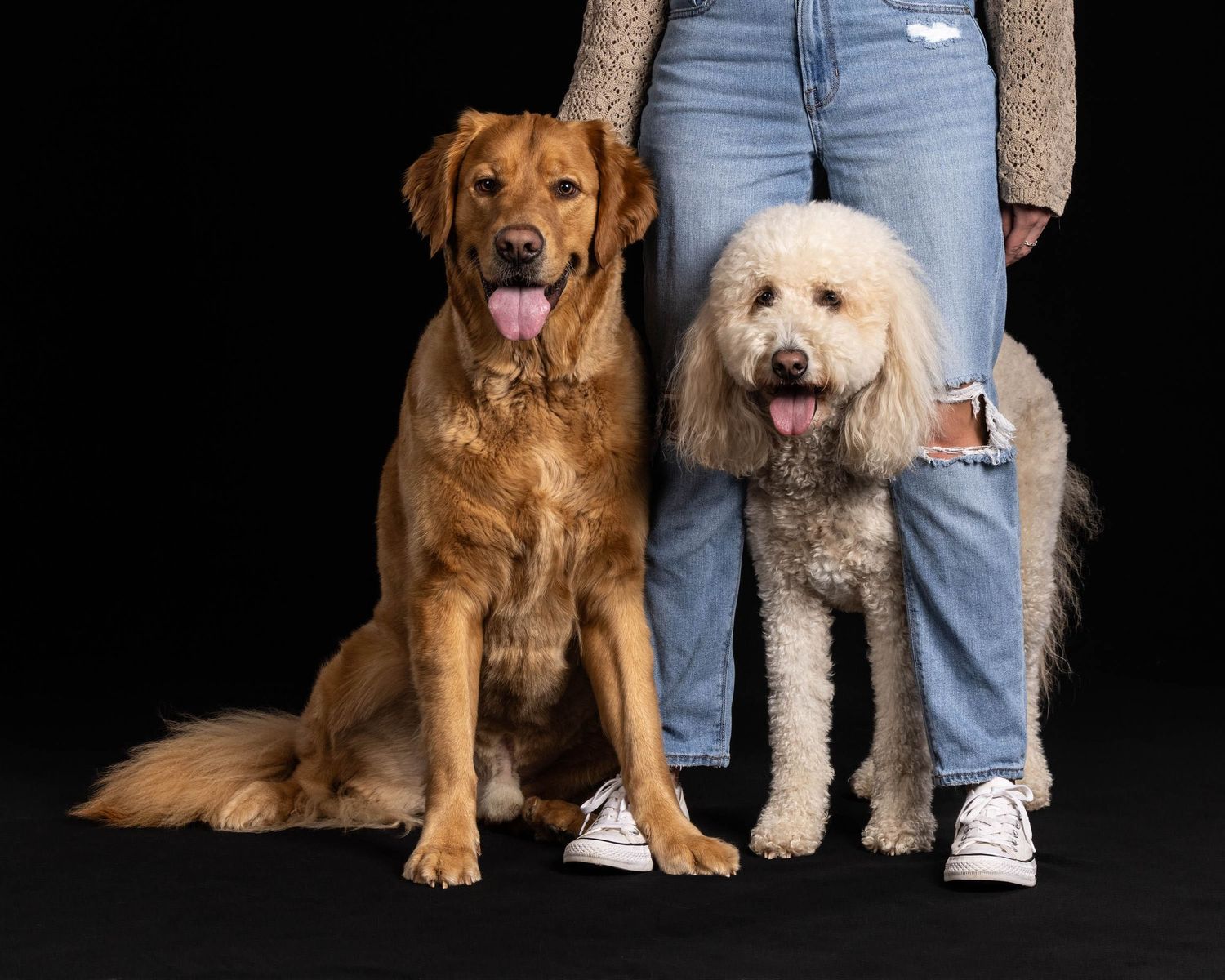
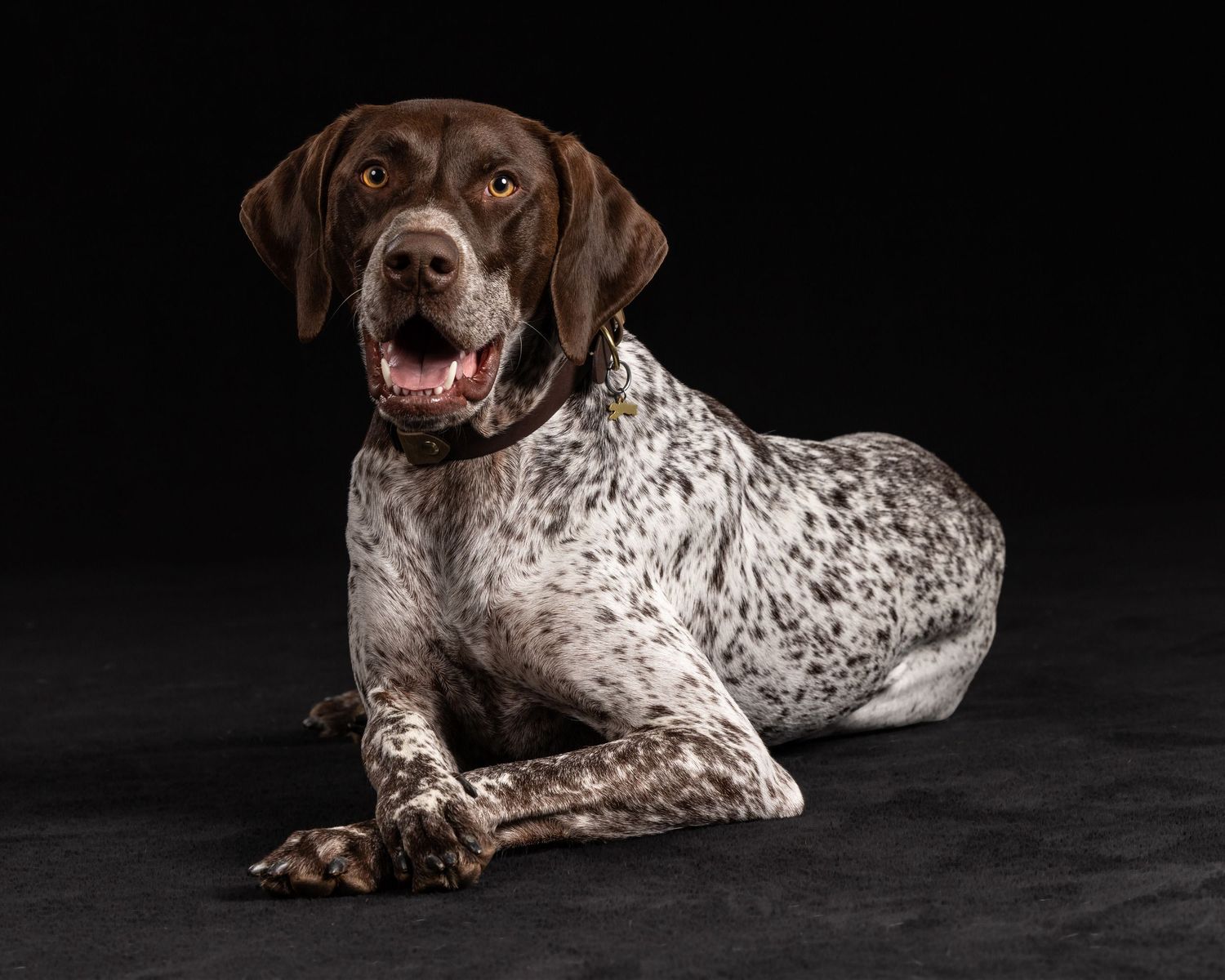
From about one to seven, you get two different dogs depending on the day. The young adult is an athlete: this is the age for action frames, alert expressions, and portraits with real presence, because the dog has the stamina for a full session and the focus to hold a look. The settled adult, four to seven, is the classic portrait subject, calmer in the studio, quicker to relax into the expressions the family knows best.
These are also the years owners postpone, because the dog seems permanent. The honest math of a dog's life says the settled years are the middle, not the whole story. If you book one professional session in a dog's life, owners who have done several tend to say the adult portrait is the anchor, the one the puppy and senior portraits arrange themselves around on the wall.
Seniors and end-of-life sessions
Senior sessions adapt to the dog: floor-level setups for stiff joints, shorter working stretches, more breaks, and a calmer room. Photographers look for the details that define an old dog, the gray muzzle, the clouded eye that still finds you, the particular way a senior rests a chin. These portraits are slower and quieter and, in many owners' accounts afterward, the most valuable ones they own.
End-of-life sessions deserve plain words. When a dog is terminally ill or very frail, many pet studios move these bookings to the front of the line and keep them gentle and brief, sometimes at the home instead of the studio. Owners hesitate to ask, fearing it is morbid. Photographers who specialize in pets, including the team at Zook Photo, regard them as among the most meaningful sessions they do. Ask early, while the dog still has good days to photograph.
Common questions
How many sessions should a dog have in its life?
Three catches most of the story: puppy, settled adult, and senior. More is better, but those three ages are so visually different that together they read as a complete life.
My senior dog cannot travel well. Are there options?
Ask the studio. Senior sessions are adapted as a matter of course, with floor-level setups and short working time, and some photographers will discuss home sessions for frail dogs.
Is it too late to photograph my old dog professionally?
Almost never. Photographers who work with seniors are used to stiff joints, deafness, and blindness, and they pace the session around the dog in front of them.
← All guides from Zook Photo← Back to Zook Photo