Here is the quiet fact of modern pet ownership: the best photograph of your dog probably lives on your phone, between screenshots and grocery lists, seen at two inches tall. Phone cameras are genuinely good now, and the files sit there anyway, because printing feels like a project. Studios that specialize in pets have reorganized themselves around that gap. The session gets you the image; the wall art is what the image was for.
This guide is about the second half: why printed, mounted portraits behave differently in a home than files do, how to size a piece for its wall, and how to choose which images deserve the treatment. It applies to a gallery from Zook Photo or any good pet studio, and most of it applies to the best frames already sitting on your phone.
What printing and mounting actually change
A print fixes everything a screen leaves temporary. It is the same in daylight and lamplight, it does not dim, notify, or get replaced by a newer phone, and it meets guests at full size in the room where life happens. Mounting, bonding the print to a rigid board, keeps it flat and wave-free for decades and lets it hang without a heavy frame. Owners who have done it describe the same surprise: the portrait becomes furniture-grade presence, a member of the household rendered at the size the dog occupies in their lives.
Print quality is a chain, and the studio controls every link: a file exposed for print rather than screen, paper chosen for fur texture, and color calibrated so a black coat prints black rather than purple-gray. Home printing breaks the chain at calibration most often. The image can be identical; the object is not, which is why studios show physical samples instead of describing them.
Sizing for the wall you actually have
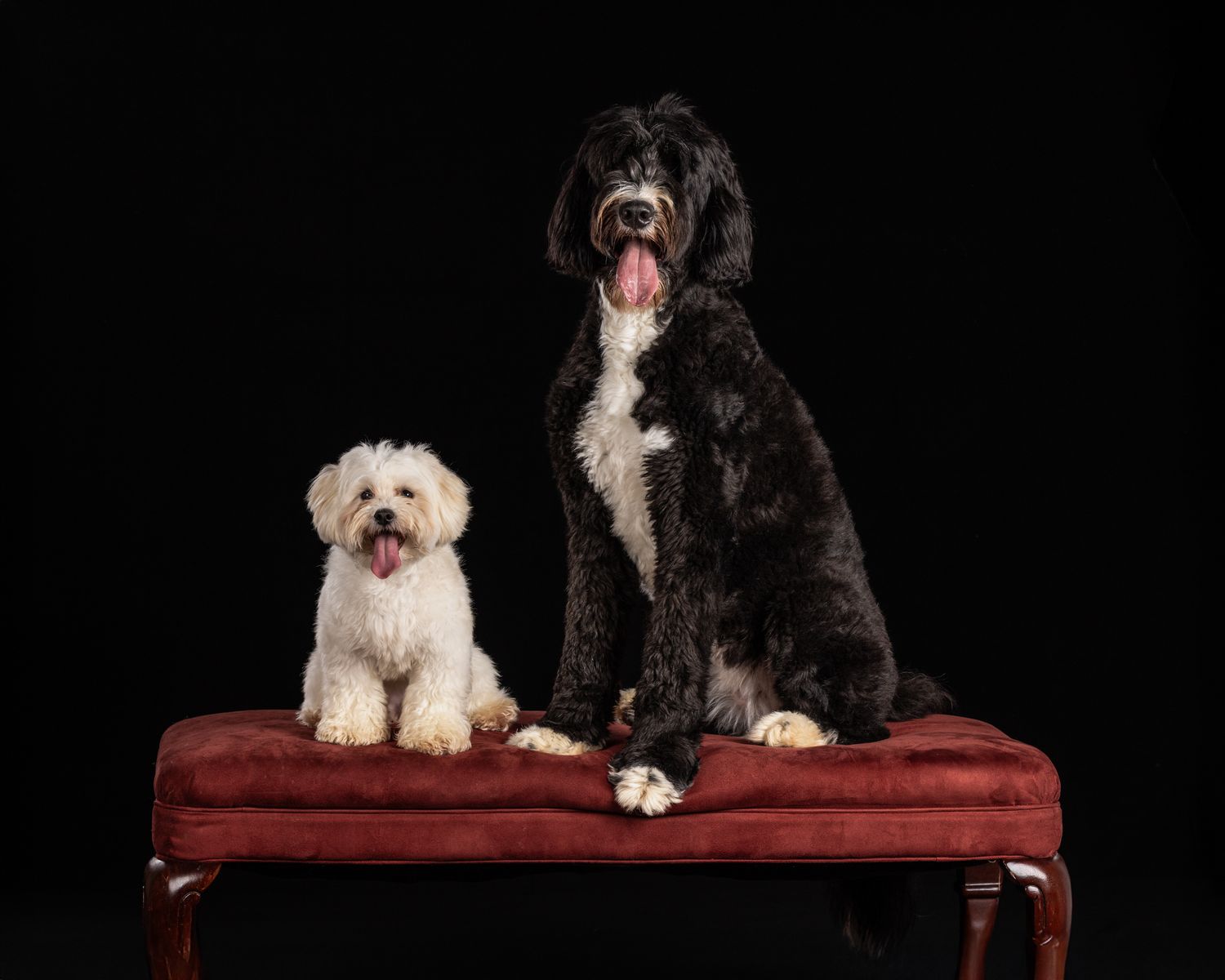
The most common sizing mistake is going too small. A portrait that felt large in the photographer's hand disappears over a sofa. The standard decorating rule puts art at roughly sixty percent of the width of the furniture it hangs above, and pet portraits follow it: over a standard sofa that means one substantial piece or a grouped set, not a lone small frame. Measure the wall, tape the outline in painter's tape at candidate sizes, and live with the tape for a day before ordering.
Grouping is the alternative to one big piece and suits a dog's story well: the puppy shot, the adult portrait, the gray-muzzled senior, in matched frames. Studios help here because session images share color and style, so a series printed together looks designed rather than collected. Hallways and stair walls, with their close viewing distance, take smaller pieces happily; living rooms and above-mantel spots reward scale.
Choosing which images earn the wall
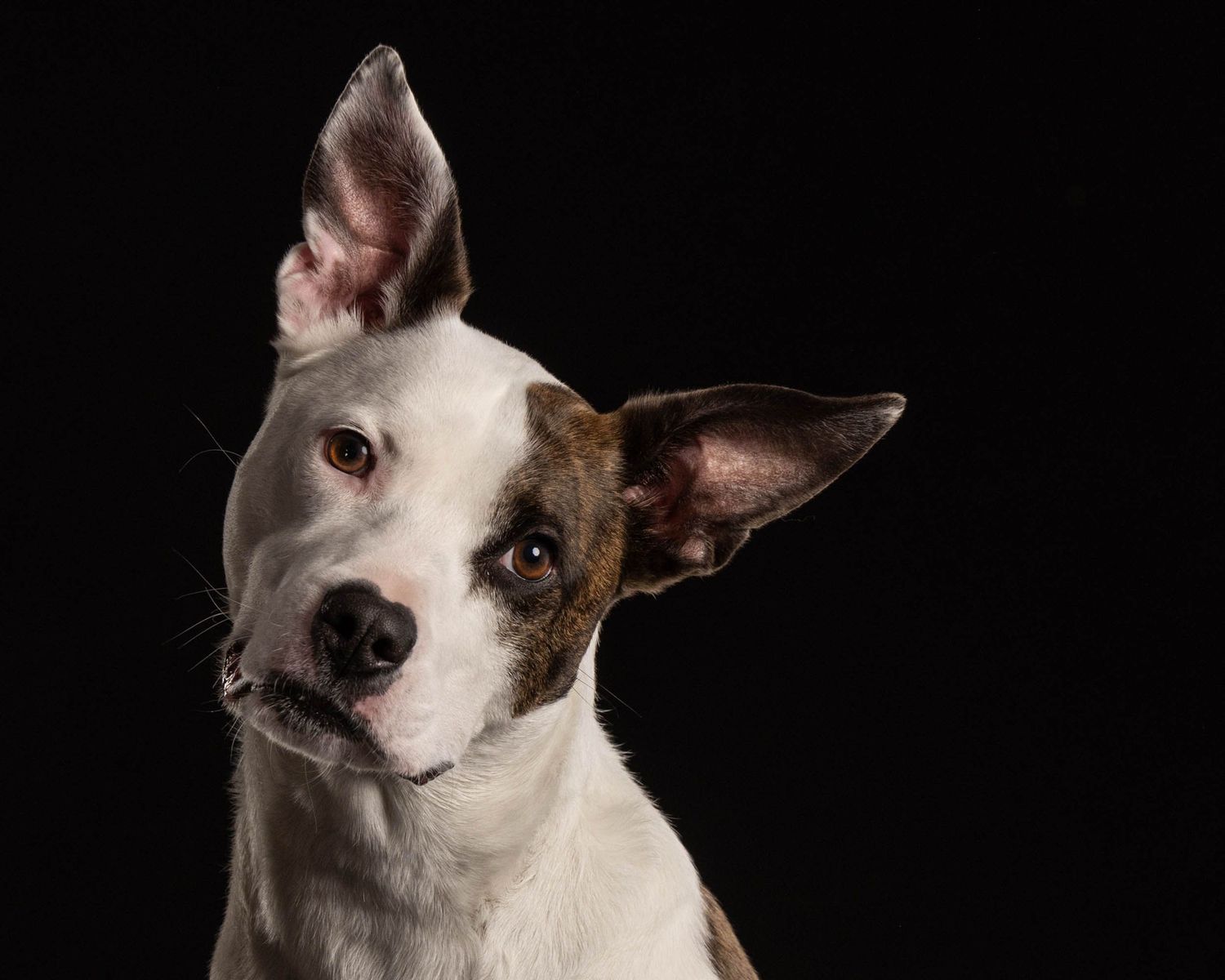
Pick for expression first and technical cleverness last. The portrait that stops owners is rarely the dramatic action frame; it is the one with the exact head tilt, ear set, and look the dog gives them at home. Second, consider the room: a calm, quiet portrait suits a bedroom, an alert and playful one suits the family room. Third, think about who is missing. A wall series planned across years should leave a space for the senior portrait you have not taken yet.
Finally, treat files as backup, not display. Buy the printed pieces for the images you love most, keep the digital files archived in two places, and reprint if life damages a piece. A home that shows its dog on the wall is making a simple statement about who counts as family, and it is a statement a phone lock screen cannot make at any resolution.
Common questions
How big should a portrait over a sofa be?
Follow the sixty-percent rule: art spanning about sixty percent of the sofa's width, whether that is one large mounted piece or a grouped set of frames.
Will a phone photo print well at a large size?
Sometimes. A sharp, well-lit phone file can print acceptably at moderate sizes, but fur texture and dark coats are where phone files run out first. Studio files are made for it.
What is the difference between a print and mounted wall art?
A print is the photograph on paper. Mounted wall art bonds that print to a rigid backing so it stays flat, resists warping, and hangs cleanly for decades.
← All guides from Zook Photo← Back to Zook Photo